
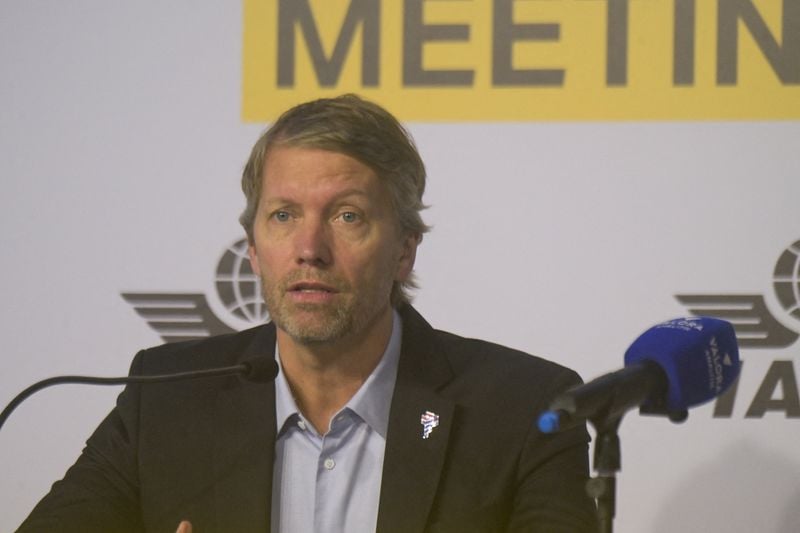
© Reuters.
By Rajesh Kumar Singh and Gabriel AraujoRIO DE JANEIRO, June 7 (Reuters) - LATAM Airlines Chief Executive Roberto Alvo said the airline industry may need to cut capacity further if elevated fuel prices persist into 2027, warning of growing pressure on airlines."If this extends for longer, I think that the industry will have to adjust capacity further," Alvo told Reuters in an interview on the sidelines of the International Air Transport Association’s annual meeting in Rio de Janeiro. "At the end of the day that’s the only way of trying to balance the equation in the industry."Alvo said airlines with strong balance sheets and more premium travelers were better placed to absorb the fuel shock.
Carriers with weaker finances or greater exposure to highly price-sensitive customers, such as ultra-low-cost carriers, would face more challenges, he said.BORROWING COSTS RISEHe said higher funding costs for airlines were already showing up in publicly traded bond prices as investors reacted to the fuel shock. If the impact of the war lasts longer, "it’s not going to get better," Alvo said.LATAM’s fuel hedges are not fully protecting the airline because current prices are above the range covered by those contracts, Alvo said.
Hedging can help smooth margins over time, but cannot fully shield an airline from a sudden fuel-price spike, he added. Alvo said aircraft and engine supply-chain problems were likely to remain a challenge for two or three years, forcing airlines to keep older planes in service for longer. Airframers and engine manufacturers "have not been able to meet their commitments," he said.
Alvo also said engine makers had gained pricing power from shortages, even as airlines absorbed the cost of delayed planes and engines."We have to absorb the problem of not having the engines of the aircraft that we purchased and that our suppliers promised," he said.
Comments
No comments yet.